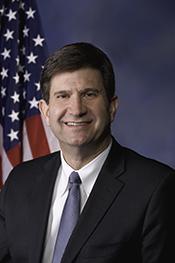
Bradley Scott Schneider
DemocratIL-10 · Representative
In the 2024 House race for IL-10, Brad Schneider (D) won with 59.9% of the vote, defeating Jim Carris (R) who received 40.0%. A third candidate also appeared on the ballot. Brad Schneider's 19.9-point advantage over the runner-up confirmed a comfortable win.
As the incumbent, Brad Schneider benefited from name recognition, established constituent services, and the roughly 2-3 point advantage that sitting members typically enjoy. The 2024 presidential election drove higher voter turnout, which can help or hurt down-ballot candidates depending on the top of the ticket.
In the 2022 House race for IL-10, Brad Schneider (D) defeated Joseph Severino (R) 63.0% to 37.0%. Brad Schneider received 152,566 votes compared to 89,599 for Joseph Severino, a dominant 26.0-point margin reflecting a safely partisan district.
As the incumbent, Brad Schneider benefited from name recognition, established constituent services, and the roughly 2-3 point advantage that sitting members typically enjoy. As a Democrat, Brad Schneider won despite the historical midterm penalty against the president's party (Democrat Biden was in office). The wide margin suggests this district is firmly in the Democrat column for the foreseeable future.
In the 2020 House race for IL-10, Brad Schneider (D) won with 63.9% of the vote, defeating Valerie Ramirez Mukherjee (R) who received 36.1%. 2 additional candidates split the remaining vote. Brad Schneider's 27.8-point advantage over the runner-up confirmed a comfortable win.
As the incumbent, Brad Schneider benefited from name recognition, established constituent services, and the roughly 2-3 point advantage that sitting members typically enjoy. The 2020 presidential election drove higher voter turnout, which can help or hurt down-ballot candidates depending on the top of the ticket. The wide margin suggests this district is firmly in the Democrat column for the foreseeable future.
In the 2018 House race for IL-10, Brad Schneider (D) defeated Douglas R. Bennett (R) 65.6% to 34.4%. Brad Schneider received 156,540 votes compared to 82,124 for Douglas R. Bennett, a dominant 31.2-point margin reflecting a safely partisan district.
As the incumbent, Brad Schneider benefited from name recognition, established constituent services, and the roughly 2-3 point advantage that sitting members typically enjoy. As a Democrat, Brad Schneider benefited from the historical midterm penalty against the president's party — with a Republican in the White House, the opposition typically gains seats.
In the 2016 House race for IL-10, Brad Schneider (D) defeated Robert J. Dold (R) 52.6% to 47.4%. Brad Schneider received 150,435 votes compared to 135,535 for Robert J. Dold, a 5.2-point margin that indicates a genuinely contested race.
Brad Schneider defeated the incumbent Robert Dold (R), which is a significant political event — most incumbents win re-election by wide margins. This was a general election upset. The 2016 presidential election drove higher voter turnout, which can help or hurt down-ballot candidates depending on the top of the ticket.
In the 2014 House race for IL-10, Robert Dold (R) defeated Bradley S. Schneider (D) 51.3% to 48.7%. Robert Dold received 95,992 votes compared to 91,136 for Bradley S. Schneider, a narrow 2.6-point margin that would have flipped with a small shift in turnout or persuasion.
This race flipped the seat from Democrat to Republican. Brad Schneider (D) held the seat previously but either retired or lost in a primary. Party flips at the seat level are relatively rare and often signal shifting district dynamics. As a Republican, Robert Dold benefited from the historical midterm penalty against the president's party — with a Democrat in the White House, the opposition typically gains seats.
In the 2012 House race for IL-10, Brad Schneider (D) defeated Robert J. Dold (R) 50.6% to 49.4%. Brad Schneider received 133,890 votes compared to 130,564 for Robert J. Dold, a razor-thin margin of just 1.3 points — among the closest races in the country.
This was an open-seat race. Open seats typically attract stronger candidates and heavier spending from both parties. The 2012 presidential election drove higher voter turnout, which can help or hurt down-ballot candidates depending on the top of the ticket.