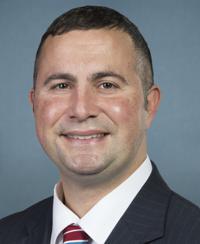
Darren Soto
DemocratFL-9 · Representative
In the 2024 House race for FL-9, Darren Soto (D) won with 55.1% of the vote, defeating Thomas Chalifoux (R) who received 42.6%. A third candidate also appeared on the ballot. Darren Soto's 12.6-point lead over the runner-up showed solid but not overwhelming support.
As the incumbent, Darren Soto benefited from name recognition, established constituent services, and the roughly 2-3 point advantage that sitting members typically enjoy. The 2024 presidential election drove higher voter turnout, which can help or hurt down-ballot candidates depending on the top of the ticket.
In the 2022 House race for FL-9, Darren Soto (D) defeated Scotty Moore (R) 53.6% to 46.4%. Darren Soto received 108,541 votes compared to 93,827 for Scotty Moore, a 7.3-point margin that indicates a genuinely contested race.
As the incumbent, Darren Soto benefited from name recognition, established constituent services, and the roughly 2-3 point advantage that sitting members typically enjoy. As a Democrat, Darren Soto won despite the historical midterm penalty against the president's party (Democrat Biden was in office). This seat will likely stay on party watch lists as potentially competitive in future cycles.
In the 2020 House race for FL-9, Darren Soto (D) won with 56.0% of the vote, defeating William P. Olson (R) who received 44.0%. A third candidate also appeared on the ballot. Darren Soto's 12.1-point lead over the runner-up showed solid but not overwhelming support.
This was an open-seat race. Open seats typically attract stronger candidates and heavier spending from both parties. The 2020 presidential election drove higher voter turnout, which can help or hurt down-ballot candidates depending on the top of the ticket.
In the 2016 House race for FL-09, Darren Soto (D) defeated Wayne Liebnitzky (R) 57.5% to 42.5%. Darren Soto received 195,311 votes compared to 144,450 for Wayne Liebnitzky, a comfortable 15.0-point margin indicating a moderately safe district.
This was an open-seat race with no incumbent running — Alan Grayson (D) previously held the seat. Open seats typically attract stronger candidates and heavier spending from both parties. The 2016 presidential election drove higher voter turnout, which can help or hurt down-ballot candidates depending on the top of the ticket.